
How to Stop Living Paycheck to Paycheck
 Eslee
Eslee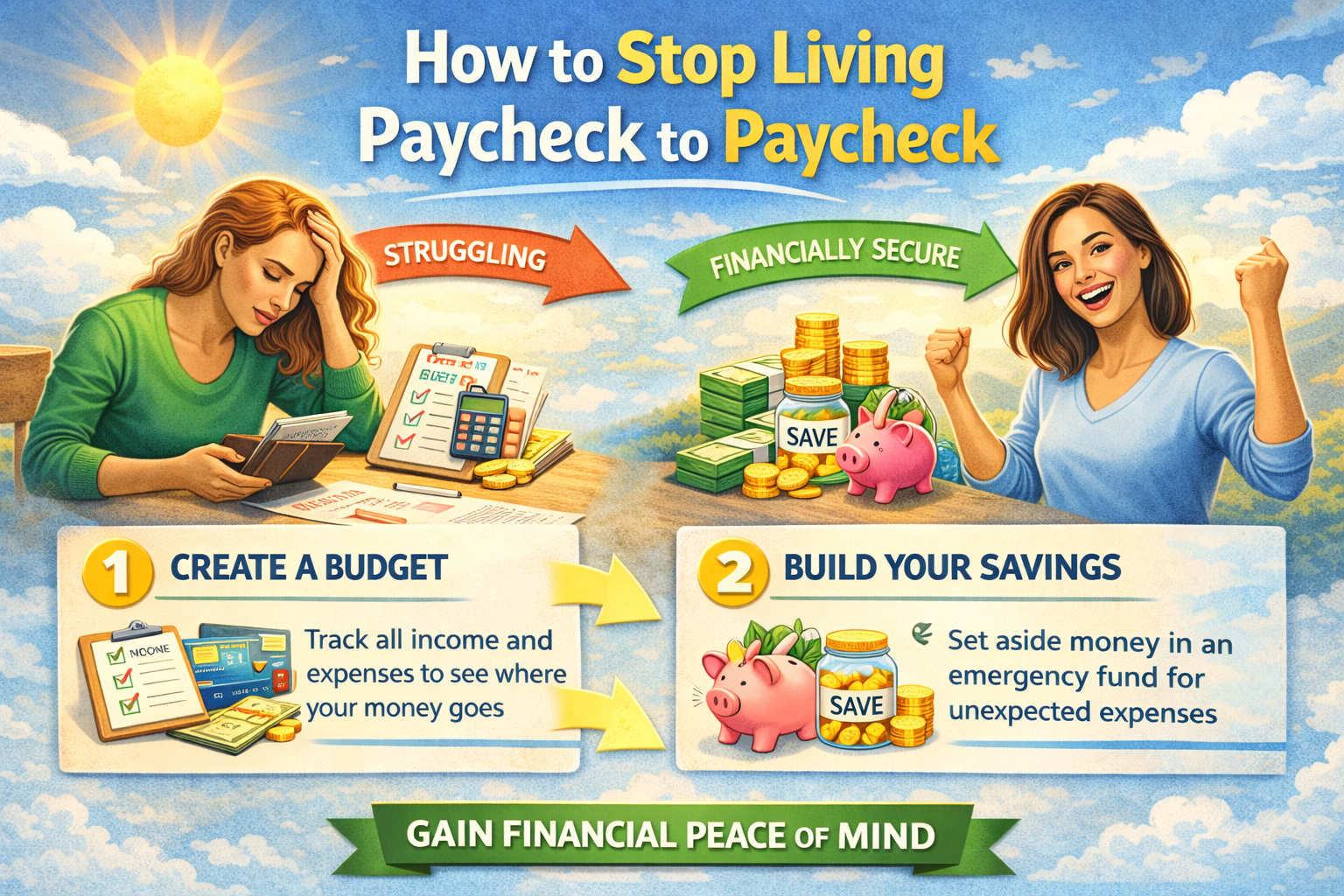
Introduction
Living paycheck to paycheck is one of the most common financial struggles today. Many hardworking people earn decent incomes yet still feel like their money disappears before the next paycheck arrives.
If you’ve ever reached the end of the month wondering where your money went, you’re not alone.
The encouraging truth is that the paycheck-to-paycheck cycle can be broken. With a few practical changes and consistent habits, you can start building financial stability and create breathing room in your finances.
This guide will show you exactly how to stop living paycheck to paycheck and begin building a stronger financial future.
👉 Quick Tip
If your income changes each month, use the lowest month from the last 2–3 months to build your budget. This keeps your plan safe and realistic.
Understand Why the Cycle Happens
The paycheck-to-paycheck cycle usually happens for a few common reasons.
These include:
- Lack of budgeting
- Rising living expenses
- Lifestyle inflation
- Unexpected emergencies
- Debt payments
Many people haven’t been taught how to manage money effectively. Once you understand where your money is going, you can begin making adjustments.
Track Your Spending for 30 Days
The first step toward breaking the cycle is understanding your spending habits.
Track every dollar you spend for one month.
This includes:
- Bills
- Groceries
- Subscriptions
- Dining out
- Small daily purchases
Many people are surprised to discover how quickly small purchases add up.
Tracking spending creates awareness and helps identify areas where money can be redirected
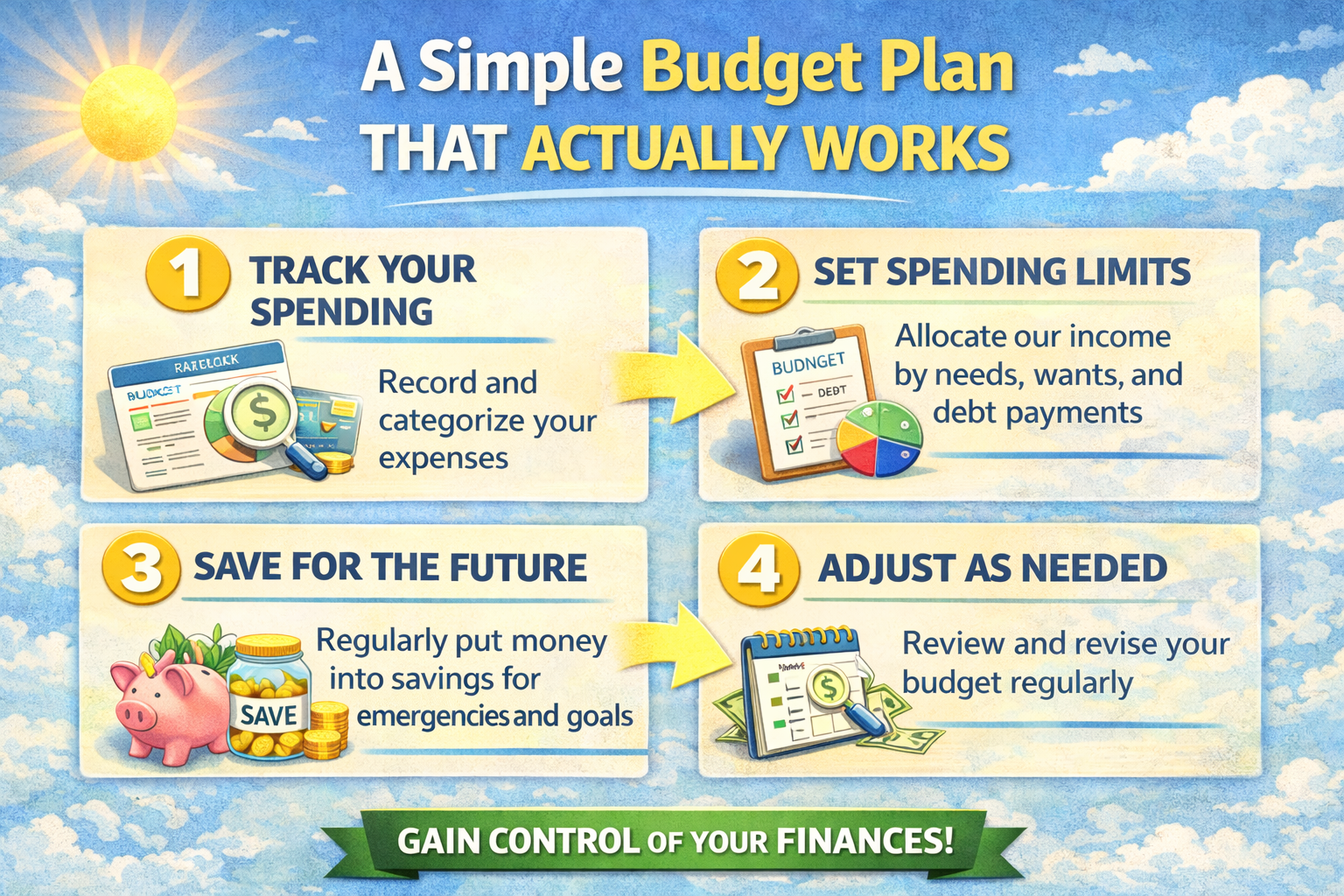
Create a Simple Budget
Once you understand your spending patterns, the next step is creating a realistic budget.
A budget helps you assign a purpose to every dollar.
Your budget should include:
- Housing
- Utilities
- Food
- Transportation
- Insurance
- Debt payments
- Savings
The goal is to ensure that your money is working for you rather than disappearing without a plan.
Build a Starter Emergency Fund
One major reason people stay stuck in the paycheck-to-paycheck cycle is unexpected expenses.
Car repairs, medical bills, and home maintenance can quickly derail your finances.
Start by saving $500 to $1,000 as a starter emergency fund.
Even a small financial cushion can prevent emergencies from turning into debt.
Reduce Unnecessary Expenses
Breaking the paycheck-to-paycheck cycle often requires temporary spending adjustments.
Look for expenses that can be reduced or eliminated.
Examples include:
- Subscription services
- Impulse shopping
- Frequent dining out
- Unused memberships
Small changes can free up significant money over time.
Increase Your Income
While reducing expenses is helpful, increasing income can dramatically accelerate financial progress.
Some options include
- Freelance work
- Online side hustles
- Selling unused items
- Gig economy work
- Affiliate marketing
An extra $200 to $500 per month can create meaningful financial breathing room.
Automate Savings
Automation removes the temptation to spend money that should be saved.
Set up automatic transfers into a savings account each time you get paid.
Even saving $25–$50 per paycheck can gradually build financial security.
Focus on Long-Term Financial Habits
Escaping the paycheck-to-paycheck cycle is not about quick fixes. It’s about building consistent habits.
These habits include:
- Budgeting regularly
- Tracking expenses
- Saving consistently
- Avoiding unnecessary debt
Over time, these habits create financial stability and peace of mind.
Final Thoughts
Living paycheck to paycheck can feel exhausting, but change is possible.
With a clear plan, disciplined spending, and consistent savings, you can gradually move toward financial freedom.
Every small improvement brings you one step closer to a future where your finances work for you instead of against you.

Many people use the Debt Snowball Method to build momentum and eliminate balances quickly.


One thought on “How to Stop Living Paycheck to Paycheck”