How to Stop Using Credit Cards to Make It to the Next Payday
 Eslee
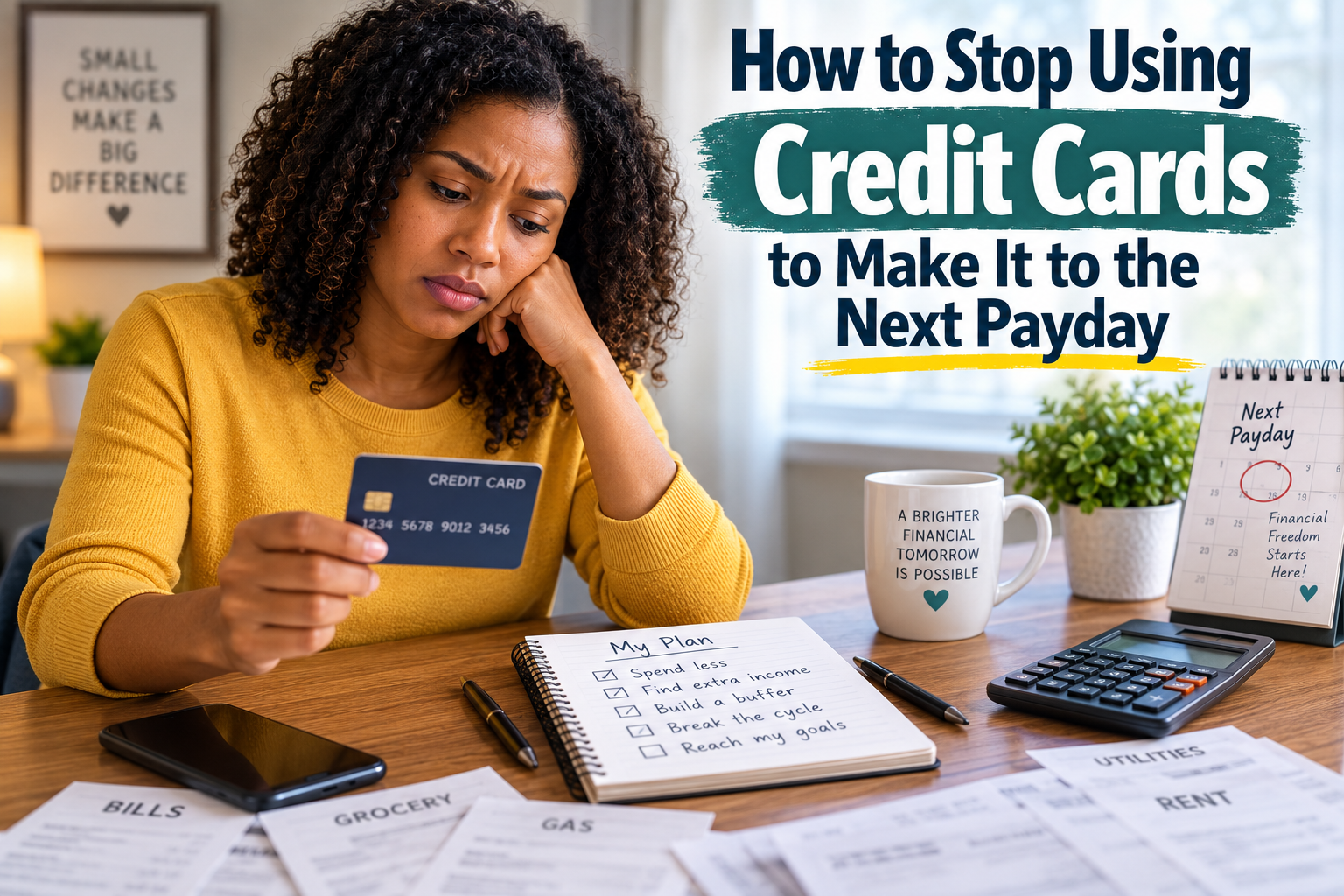
Payday arrives, and for a moment, everything feels manageable.
You pay the rent or mortgage. The utility bills come out. You buy groceries, fill up the car with gas, make your minimum debt payments, and take care of the other expenses that have been waiting.
Then you check your bank account.
And there are still several days or maybe an entire week until your next paycheck.
But you still need groceries.
You still need gas.
Something unexpected comes up.
So you reach for the credit card.
You tell yourself:
“I'll pay it back when I get paid.”
Then payday comes, but that paycheck already has another list of bills waiting.
You make a payment on the credit card, but before the next payday, you need to use it again.
And the cycle continues.
If this sounds familiar, the problem isn't necessarily that you're careless with money. Your monthly expenses may be consuming your income faster than your pay schedule can support them. You may also be dealing with high debt payments, irregular expenses, rising everyday costs, or simply not earning enough to cover your current obligations comfortably.
Whatever the reason, you are using a credit card to repeatedly bridge the gap between paychecks, which can make an already tight financial situation even harder.
The good news is that you don't have to fix everything at once.
The first goal is simpler:
Create enough breathing room that you no longer need your credit card to make it to payday.
Here are 10 practical ways to start.
Why Using Credit Cards Between Paychecks Becomes a Problem
Using a credit card occasionally isn't necessarily a financial problem.
The warning sign is when the card becomes necessary for normal living expenses.
For example, suppose you bring home $4,000 per month.
Your regular expenses total $3,800.
Then throughout the month you charge another $400 for groceries, gas, household purchases, and unexpected expenses.
Your lifestyle actually costs $4,200.
But your income was only $4,000.
That $200 difference had to come from somewhere.
The credit card filled the gap.
Next month, you have the same $4,000 income—but now you also have last month's credit card balance and possibly interest to deal with.
If nothing changes, you may borrow again.
This is why simply making larger credit card payments doesn't always solve the problem.
You have to address the cash-flow shortage that keeps sending you back to the card.
1. Find Out Exactly How Much You're Short Each Month
Before cutting expenses or creating a new debt payoff strategy, determine the size of the problem.
For the next month, track the purchases you put on your credit card because there wasn't enough cash available.
Don't include planned purchases that you charge and immediately pay off.
You're looking specifically for purchases you needed the credit card to cover.
For example:
Groceries: $95, Gas: $60, Household supplies: $45, prescription: $30, and unexpected school expense: $50; total of $280
Now you know something important.
You're not simply “bad with credit cards.”
Your current monthly cash flow is approximately $280 short.
That gives you a target.
Your first financial goal becomes finding approximately $280 through reduced expenses, increased income, better timing—or a combination of all three.
A specific problem is much easier to solve than
“I need to stop using my credit cards.”
2. Separate Necessary Credit Card Spending From Optional Spending
Not every credit card purchase is the same.
If you charge groceries because there's no money left, that's different from charging a new pair of shoes you hadn't planned to buy.
Go through your recent credit card statements and divide purchases into two categories:
Necessary expenses and optional expenses
Necessary expenses might include:
- groceries,
- gas,
- medication,
- basic household supplies,
- essential car repairs.
Optional expenses might include:
- restaurant meals,
- entertainment,
- unplanned shopping,
- upgrades,
- convenience purchases,
- impulse purchases.
This exercise helps you determine what kind of problem you're solving.
If most of the spending is optional, changing spending habits may create the room you need.
But if almost everything you're charging is essential, your problem may be different.
Your basic expenses may simply be too close to—or greater than—your current income.
In that situation, cutting unnecessary spending can help, but increasing income may also need to become part of your plan.
3. Build a Bare-Bones Payday Budget
A monthly budget is useful, but when you're struggling between paychecks, it can help to budget around each paycheck.
Suppose you get paid every two weeks.
Instead of asking:
“Can I afford this this month?”
Ask
“What does this paycheck need to cover before the next paycheck arrives?”
Write down your next paycheck.
Then list everything that must be paid from it before you're paid again.
For example:
Take-home paycheck: $1,850
Rent portion: $750
Utilities: $175
Groceries: $250
Gas: $120
Insurance: $150
Minimum debt payments: $180
Other essentials: $100
Remaining:
$125
Now you know exactly what you're working with.
This can help prevent spending too much during the first few days after payday and then relying on credit during the final few days.
Think of each paycheck as having a job before it arrives.
4. Find Your Three Biggest Money Leaks
This is where your spending review becomes especially valuable.
You don't need to cut 20 different things.
Start with three.
Look for expenses that are:
frequent, unnecessary, or larger than you realized.
Maybe you discover:
Food delivery: $160 per month
Subscriptions you rarely use: $55
Unplanned shopping: $125
That's
$340 per month.
You don't necessarily have to eliminate all $340.
Maybe you reduce delivery by $80.
Cancel $35 in subscriptions.
Reduce shopping by $75.
You just created:
$190 of monthly breathing room.
That $190 can now pay for groceries or gas that previously went on the credit card.
This is why identifying your money leaks matters.
You're not cutting expenses simply to spend less.
You're redirecting money so you don't have to borrow it later.
5. Build a Small Payday Buffer
A full emergency fund is important, but if you're constantly running out of money before payday, start with a smaller goal.
Build a payday buffer.
Your first target might be
$100
Then:
$250
Then:
$500
This money isn't for entertainment or regular shopping.
It's there to prevent a small cash-flow problem from becoming another credit card balance.
Imagine you're four days from payday and need $65 for groceries.
Previously, you would have used the credit card.
Now you have a buffer.
You use $65 from it and replenish the money after payday.
Eventually, the goal is to stop needing the buffer for ordinary expenses too.
But during the transition, it can help you break your automatic dependence on credit.
6. Prepare for Irregular Expenses Before They Arrive
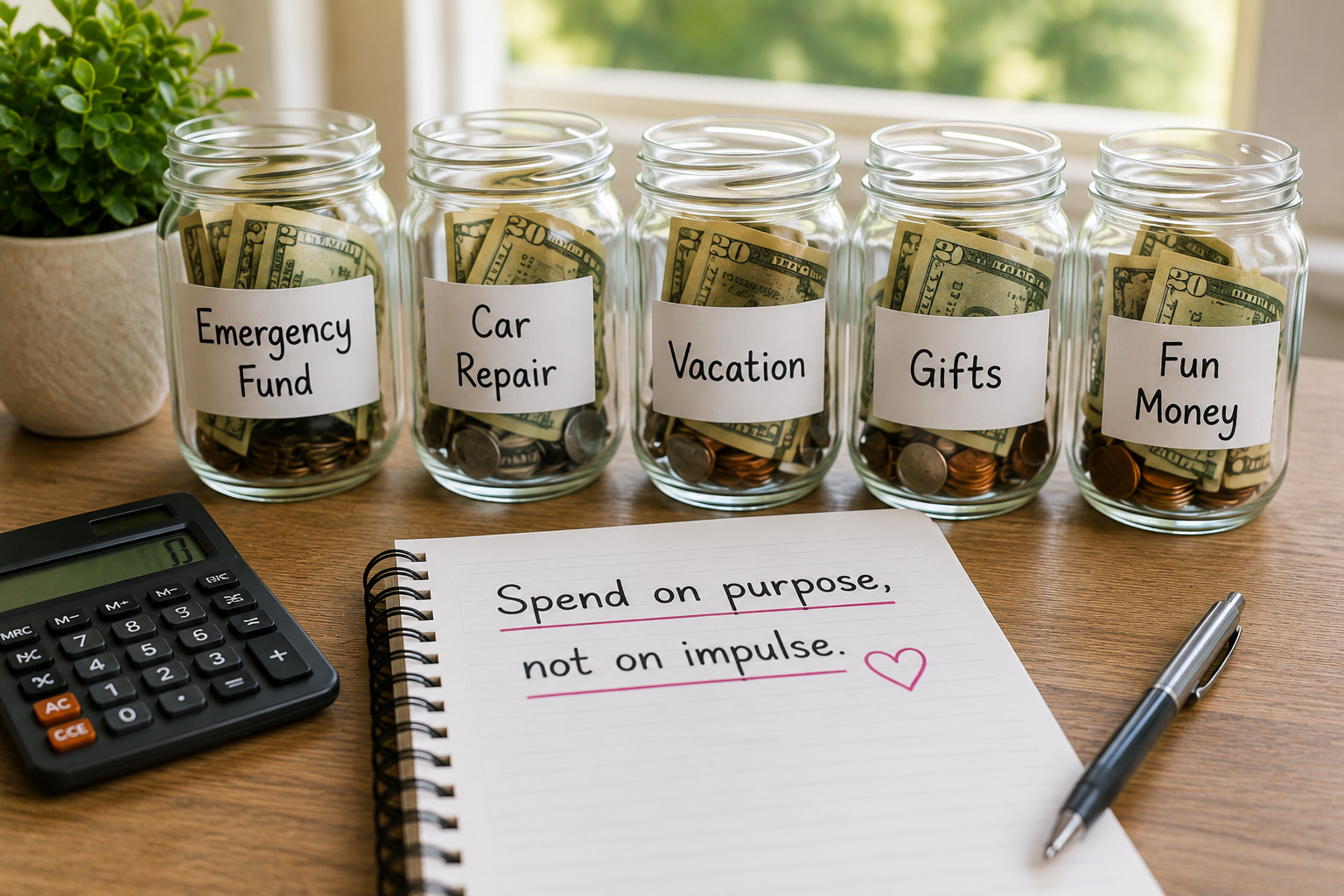
Sometimes you're not overspending at all.
Your budget simply isn't accounting for expenses that don't happen every month.
Car registration.
School expenses.
Birthdays.
Holiday gifts.
Insurance premiums.
Car maintenance.
Pet expenses.
Annual subscriptions.
Home repairs.
These expenses can feel unexpected because they aren't part of your regular monthly bills.
But many of them are predictable.
That's where sinking funds can help.
Suppose your annual car registration costs $240.
Instead of trying to find $240 when the bill arrives, save:
$20 per month.
If you expect to spend $600 during the holidays, saving:
$50 per month
gives you $600 after a year.
Small monthly amounts can prevent larger expenses from landing on your credit card later.
7. Make Your Credit Card Less Convenient to Use
If pulling out the credit card has become automatic, create a little friction.
You don't necessarily need to close the account.
Instead, make it harder to use impulsively.
You could:
- Remove saved card information from shopping websites,
- Remove the card from digital wallets,
- Stop carrying it for routine shopping
- Turn off one-click purchasing,
- Avoid using it for everyday expenses while you're breaking the habit.
The goal isn't punishment.
It's creating a moment to think.
When you have to stop and manually retrieve the card information, you get an opportunity to ask:
“Do I actually have the money for this?”
That small pause can prevent a surprising number of unnecessary purchases.
8. Change the Timing of Your Bills
Sometimes the problem isn't how much money you earn.
It's when your money comes in compared with when your bills go out.
Maybe most of your bills are due during the first half of the month.
Your first paycheck disappears quickly.
Then you're trying to stretch what's left until the next one.
Contact your service providers or creditors and see whether any due dates can be changed.
You may be able to spread bills more evenly across your paychecks.
For example:
Instead of having eight bills due between the 1st and 10th, perhaps some can be moved to the second half of the month.
This doesn't reduce your expenses.
But it can improve your cash flow, which may reduce the need to use credit between paychecks.
9. Use Additional Income to Break the Cycle—not Expand Your Lifestyle
There comes a point where cutting expenses has limits.
You can cancel subscriptions.
You can reduce restaurant spending.
You can shop carefully.
You can lower unnecessary expenses.
But you still need:
housing,
food,
transportation,
utilities,
insurance,
and other necessities.
If your essential expenses are consuming almost everything you earn, increasing your income may need to become part of your debt-freedom strategy.
That could mean:
- working additional hours,
- taking occasional overtime,
- freelancing,
- selling unused items,
- offering a service,
- developing a new skill,
- starting a side business,
- or creating another source of income.
But there's an important rule.
Give the additional income a purpose before it arrives.
Suppose you start earning an extra $400 per month.
You might decide:
$200 builds your emergency fund
$150 goes toward credit card debt.
$50 stays available for irregular expenses.
Now your additional income is helping you escape the credit-card cycle.
If the extra $400 simply becomes additional spending, your financial situation may not improve.
10. Stop Adding New Debt Before Trying to Pay Everything Off Quickly
When people become frustrated with credit card debt, they often want to attack it aggressively.
That's understandable.
But imagine this:
You have an extra $400.
You send all $400 to your credit card.
Two weeks later, your car needs a $300 repair.
You don't have savings.
So you put $300 back on the credit card.
You made a $400 payment but added $300 of new debt.
Your net progress was only $100—before considering interest or other charges.
This is why your first goal may need to be:
Stop creating new credit card debt.
Then:
Build a small emergency cushion.
Then:
Increase your debt payments.
That may feel slower at first.
But it can create more sustainable progress because you're reducing the chances that every unexpected expense sends you backward.
What If You Truly Don't Have Anything Left to Cut?
This is an important question because sometimes “spend less” isn't enough.
You may already be living simply.
Your housing may be reasonable.
You may rarely eat out.
You may not have unnecessary subscriptions.
You may already shop carefully.
And you may still struggle to make it from one paycheck to the next.
If that's your situation, don't keep searching for a $5 expense as though eliminating it will solve a $500 monthly shortage.
Look at the bigger numbers.
Ask:
Is my housing consuming too much of my take-home pay?
Is transportation unusually expensive?
Are debt payments taking a large portion of my income?
Have insurance, utilities, or other essential expenses increased significantly?
Is my current income simply too low for my basic cost of living?
The answer may involve bigger changes.
That could mean renegotiating or shopping around for certain services, changing transportation costs when practical, restructuring parts of your lifestyle, or focusing more seriously on increasing income.
Cutting expenses has a floor.
Income has more room to grow.
A strong financial plan should consider both.
What to Do With Your Credit Card While You're Breaking the Cycle
You don't necessarily have to close your credit cards.
But you do need to change their role.
Your credit card should stop functioning as
“Money I'll have after payday.”
That's borrowing from your future income.
Instead, work toward using credit only when you already have a plan for paying it.
One simple rule can help:
Don't charge something today unless you know where the money to pay for it is coming from.
If the answer is
“My next paycheck,”
Stop and look at that next paycheck.
Is the money truly available?
Or does that paycheck already have bills waiting for it?
That question can prevent you from spending the same paycheck twice.
A Simple 30-Day Plan to Stop Relying on Credit Cards
If the whole process feels overwhelming, don't try to fix everything today.
For the next 30 days, focus on five things:
Week 1: Review your last two or three credit card statements. Identify how much of your spending was necessary versus optional.
Week 2: Create a paycheck-based spending plan. Determine exactly what your next paycheck needs to cover.
Week 3: Cut or reduce your three biggest unnecessary money leaks and redirect that money toward everyday expenses.
Week 4: Start building your first $100–$500 cash buffer and identify at least one irregular expense that needs a sinking fund.
At the end of 30 days, ask:
Did I charge less than last month?
That's your first measurement of success.
You don't have to go from charging $500 a month to zero immediately.
Maybe you go from:
$500 → $350 → $200 → $75 → $0
That's progress.
Don't Confuse a Credit Limit With Available Income
A $5,000 credit limit can create the feeling that you have $5,000 available.
You don't.
You have permission to borrow up to $5,000.
There's an important difference.
Your available income is the money you actually earn.
Your savings are money you already own.
Your available credit is money you may have to repay—with interest.
Keeping those categories separate can change the way you look at a credit card.
Instead of seeing:
Available Credit: $3,850
and thinking:
“I still have plenty available,”
begin thinking:
“How much money do I actually have available in my financial plan?”
That's the number that matters.
The Goal Is to Stop Borrowing From Your Next Paycheck
Breaking the credit-card cycle doesn't necessarily begin with paying off every dollar you owe.
It begins when your next paycheck stops being responsible for purchases you made with your last one.
That's the turning point.
You create a little breathing room.
Then a small buffer.
Then an emergency fund.
Then you stop adding new debt.
Then the payments you make toward your existing debt actually begin moving you forward.
You may not notice a dramatic difference immediately.
But eventually something changes.
You're three days from payday.
You need groceries.
You check your account.
And the money is already there.
No credit card.
No borrowing from your next paycheck.
No adding another balance you'll have to deal with later.
Just money you planned for an expense you knew was coming.
That may seem like a small victory.
But it's an important one.
Because you're no longer using tomorrow's money to survive today.
You're beginning to take control of the money you already have.
And that's one more step toward building your debt freedom.