15 Budgeting Challenges Keeping You Stuck in Debt—A Simple Plan to Finally Take Control
 Eslee
Eslee
Why Budgeting Feels So Hard—Even When You Know You Need It
You’ve told yourself before:
“I need to get my finances under control.”
Maybe you’ve even tried.
You downloaded a budgeting app.
You wrote numbers down.
You promised yourself, “This time will be different.”
But somehow… it didn’t stick.
And now, instead of feeling motivated, you feel overwhelmed. Frustrated. You may even experience a sense of defeat.
Here’s the truth most people don’t say out loud:
👉 Budgeting isn’t hard because you’re bad with money.
👉 It’s challenging because you’re trying to fix a complex problem without a clear system.
Right now:
- Nearly 69% of Americans are living paycheck to paycheck
- Over 77% carry some form of debt
- And the majority report ongoing financial stress year after year
So if you feel stuck, you’re not alone—you’re part of a much bigger picture.
But here’s the good news:
Once you understand the real reasons budgeting feels impossible… You can finally start fixing them.
Part 1: The 15 Real Reasons Budgeting Feels Impossible
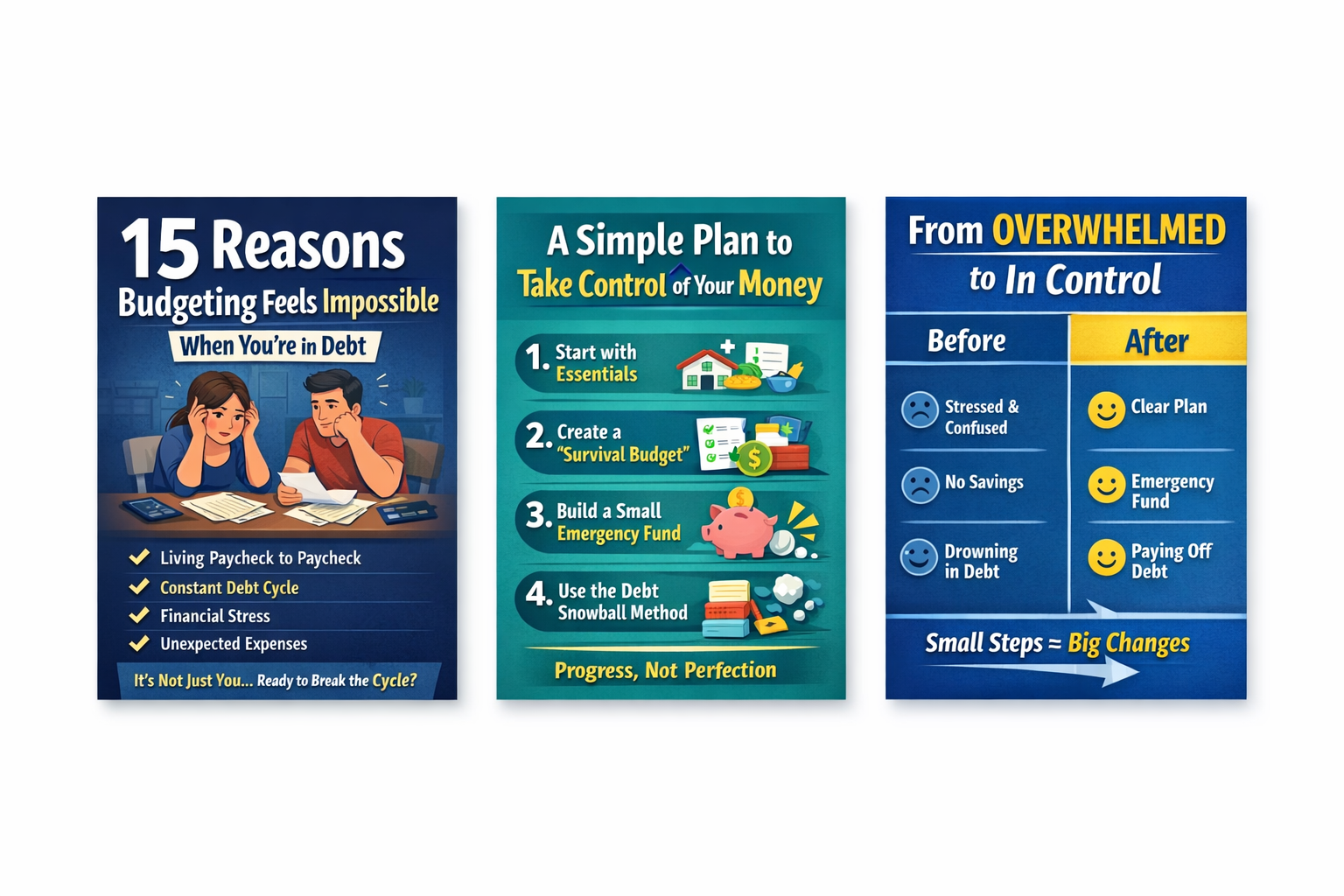
1. You Don’t Know Where to Start
When everything feels messy, starting feels overwhelming.
You look at your bank account and think,
“Where do I even begin?”
So you don’t.
👉 What’s really happening: Lack of clarity creates inaction.
2. You’re Living Paycheck to Paycheck
Your money is already gone before it arrives.
Rent. Bills. Groceries. Gas.
There’s nothing left to “budget.”
👉 Budgeting feels pointless when survival comes first.
3. You’re Stuck in the Debt Cycle
You make payments… then something comes up… and you use credit again.
It feels like running on a treadmill that never stops.
👉 Progress gets canceled out by reality.
4. Financial Stress Is Draining Your Energy
Money stress isn’t just financial—it’s emotional.
It shows up as:
- Anxiety
- Avoidance
- Decision fatigue
👉 When you’re overwhelmed, you avoid the very thing that could help.
5. You’re Not Tracking Where Your Money Goes
You feel broke… but you don’t actually know why.
Small expenses add up:
- Subscriptions
- Takeout
- Quick purchases
👉 Without visibility, there’s no control.
6. Your Income Feels Too Low
Even if you budget perfectly, it still feels tight.
This is where many people give up.
👉 But the truth is, budgeting isn’t just about cutting—it’s about directing what you do have.
7. You Don’t Have Clear Financial Goals
If you don’t know what you’re working toward…
Why stick to a plan?
👉 Goals turn restriction into purpose.
8. Unexpected Expenses Keep Knocking You Back
Car repairs. Medical bills. Home issues.
One surprise can undo weeks of effort.
👉 Without a buffer, every problem becomes a setback.
9. Medical Debt Adds Pressure
Even a minor health issue can turn into long-term payments.
👉 This isn’t about poor planning—it’s about real-life unpredictability.
10. Emotional Spending Gets in the Way
Stress → Spending → Regret → Repeat
It’s not about discipline.
It’s about patterns.
👉 Money is often tied to emotions more than logic.
11. Budgeting Feels Too Complicated
Too many methods. Too many opinions.
You try one… then another… then quit.
👉 Complexity kills consistency.
12. The Cost of Living Keeps Rising
Groceries. Rent. Gas.
Everything costs more than it did a year ago.
👉 You’re adjusting to a moving target.
13. Your Expenses Are Mostly Fixed
Housing. Car. Insurance.
You can’t easily reduce these.
👉 It feels like you have no room to breathe.
14. You Struggle With Consistency
You start strong… then life gets busy.
And slowly, the system disappears.
👉 Budgeting fails when it isn’t sustainable.
15. You’ve Tried Before—and It Didn’t Work
This one cuts the deepest.
Because now you’re thinking:
“Why would this time be any different?”
👉 But here’s the truth:
You didn’t fail. You just didn’t have the right system.
Part 2: The Shift Most People Miss
Most budgeting advice focuses on:
- Cutting expenses
- Tracking every dollar
- Being more disciplined
But that’s not what people actually need.
👉 What you really need is:
✔ A simple starting point
✔ A system that fits your life
✔ Small wins that build momentum
Because clarity leads to confidence.
And confidence leads to consistency.
Part 3: A Simple, Practical Plan to Take Control of Your Finances
Let’s simplify everything.
This is not about perfection.
This is about progress you can stick to.
Step 1: Get Clear on Your Income - Your Starting Point
Start with one simple question:
👉 How much money is actually coming in?
Include:
- Paycheck (after taxes)
- Side income
- Any additional sources
💡 Why this matters:
You can’t plan what you don’t define.
Step 2: Track Your Essentials First (Not Everything)
Forget complicated categories.
Start with:
- Housing
- Utilities
- Food
- Transportation
- Minimum debt payments
💡 Why this works:
It simplifies the process and removes overwhelm.
Step 3: Create a “Survival Budget” First
This is your bare-minimum plan.
Not perfect. Not ideal.
Just enough to:
- Cover essentials
- Stay afloat
- Reduce stress
👉 This builds confidence quickly.
Step 4: Identify One Small Money Leak
Not ten. Just one.
Examples:
- Eating out less once per week
- Canceling one unused subscription
💡 Why this matters:
Small wins create momentum.

Step 5: Choose a Simple Debt Strategy
Start with something easy to follow:
👉 Debt Snowball Method
- Pay off the smallest debt first
- Build quick wins
- Stay motivated
💡 Progress > perfection
Step 6: Build a Small Emergency Cushion
Start with:
👉 $500–$1,000
Not a full emergency fund yet.
This is merely a precautionary measure to reduce dependence on credit.
Step 7: Make It Weekly (Not Monthly)
Monthly budgeting feels overwhelming.
Instead:
👉 Check your money once a week
- Review spending
- Adjust slightly
- Stay aware
💡 This keeps you connected without stress.
Step 8: Focus on Progress, Not Perfection
You will mess up.
Everyone does.
👉 The difference is:
You keep going instead of quitting.
Part 4: What This Looks Like in Real Life
Let’s make this real.
Before:
- No plan
- Constant stress
- Using credit to survive
- Avoiding finances
After:
- Clear starting point
- Simple weekly check-ins
- Small debt wins
- Growing confidence
👉 Same income. Different system.
Part 5: Why This Approach Actually Works
Because it’s built on:
✔ Simplicity
✔ Real-life flexibility
✔ Small, achievable steps
✔ Emotional awareness, not guilt.
Not pressure.
Not unrealistic expectations.
Conclusion:
You Don’t Need a Perfect Budget—You Need a Starting Point
If you’ve been struggling…
It’s not because you’re bad with money.
It’s because:
- You’ve been overwhelmed
- You’ve been given complicated advice
- You didn’t have a system that fits your life
But now you do.
👉 Start small
👉 Stay consistent
👉 Focus on progress
Because the moment you take control—even in a small way
Everything starts to change.
Once you become debt-free, the next step is learning how to manage your money wisely to stay financially secure.
What to read next
A Beginner’s Guide to Money Management & Simple Habits That Build Wealth