Understanding Why Budgeting Matters
 Eslee
Eslee
Before you move forward with your budget, it’s important to understand why budgeting is so powerful—especially when you’re in debt.
Budgeting isn’t about restriction. It’s about giving your money direction.
When you have a plan, your money stops feeling out of control—and starts working for you.
Why Budgeting Is So Important
A budget gives you visibility into your financial life.
Instead of guessing where your money went, you can clearly see:
- What you’re spending
- Where you may be overspending
- How much can you put toward debt?
This clarity is what allows you to make better financial decisions—without feeling overwhelmed.
👉 Common Mistake to Avoid
Cutting everything at once can lead to burnout. Instead, reduce spending gradually so your budget feels sustainable.
The Real Benefits of Budgeting
When you stick to a simple budget, you begin to notice real changes.
Budgeting helps you:
- Pay off debt faster
- Reduce financial stress and anxiety
- Build an emergency fund over time
- Stay consistent with your financial goals
- Feel more confident about your money
It’s not about being perfect—it’s about being intentional.
👉 Quick Tip
Always pay at least the minimum payment on every debt to avoid late fees and protect your credit score.
👉 Pro Tip
Your budget should change as your life changes. A flexible budget is a sustainable budget.
Setting Clear Financial Goals
A budget works best when it’s tied to something meaningful.
That’s where financial goals come in.
Your goals give your budget a purpose—and keep you motivated when things get tough.
Short-Term vs Long-Term Goals
Start by breaking your goals into two categories.
Short-Term Goals
These are goals you can reach within the next 12 months:
Long-Term Goals
- Paying off a credit card
- Saving your first $1,000
- Catching up on bills
These take more time and planning:
- Becoming completely debt-free
- Buying a home
- Saving for retirement
Both types of goals matter—they just require different timelines.
👉 Pro Tip
Even an extra $50–$100 per month toward debt can significantly reduce how long it takes to become debt-free.
Prioritize What Matters Most
After listing your goals, please prioritize what is most important at this moment.
This helps you focus your money where it will make the biggest impact.
For example:
- If you’re in heavy debt, prioritize debt payoff
- If you have no savings, build a small emergency fund first
You don’t have to do everything at once.
Understand Your Income and Expenses
Before your budget can work, you need a clear picture of your finances.
Track Your Income
List all sources of money that are coming in:
- Your paycheck
- Side income
- Freelance work
- Any additional income streams
Please consider using your actual take-home income instead of your gross income.
👉 What is Gross Income?
Gross income is the amount you earn before taxes and deductions are taken out.
👉 What to Use for Your Budget
For budgeting, always use your take-home income (net income)—this is the actual amount deposited into your account after taxes, insurance, and other deductions.
This ensures your budget is realistic and prevents you from overestimating how much you can spend.
👉 Quick Tip
If your income changes each month, use the lowest month from the last 2–3 months to build your budget. This keeps your plan safe and realistic.
Break Down Your Expenses
Next, separate your expenses into two categories.
Fixed Expenses
These stay mostly the same each month:
- Rent or mortgage
- Utilities
- Loan payments
- Insurance
Variable Expenses
These change month to month:
- Groceries
- Gas
- Dining out
- Entertainment
This step helps you see where you have flexibility.
Creating a Simple Budget That Works
Now that you understand your numbers, it’s time to build your budget.
Keep it simple—because simple is what works long-term.
Choose a Budgeting Method
Pick a method that fits your lifestyle.
Some common options:
- Zero-based budgeting (every dollar has a job)
- Envelope system (cash-based spending)
- Budgeting apps or spreadsheets
The best method is the one you’ll actually use consistently.
Assign Your Income
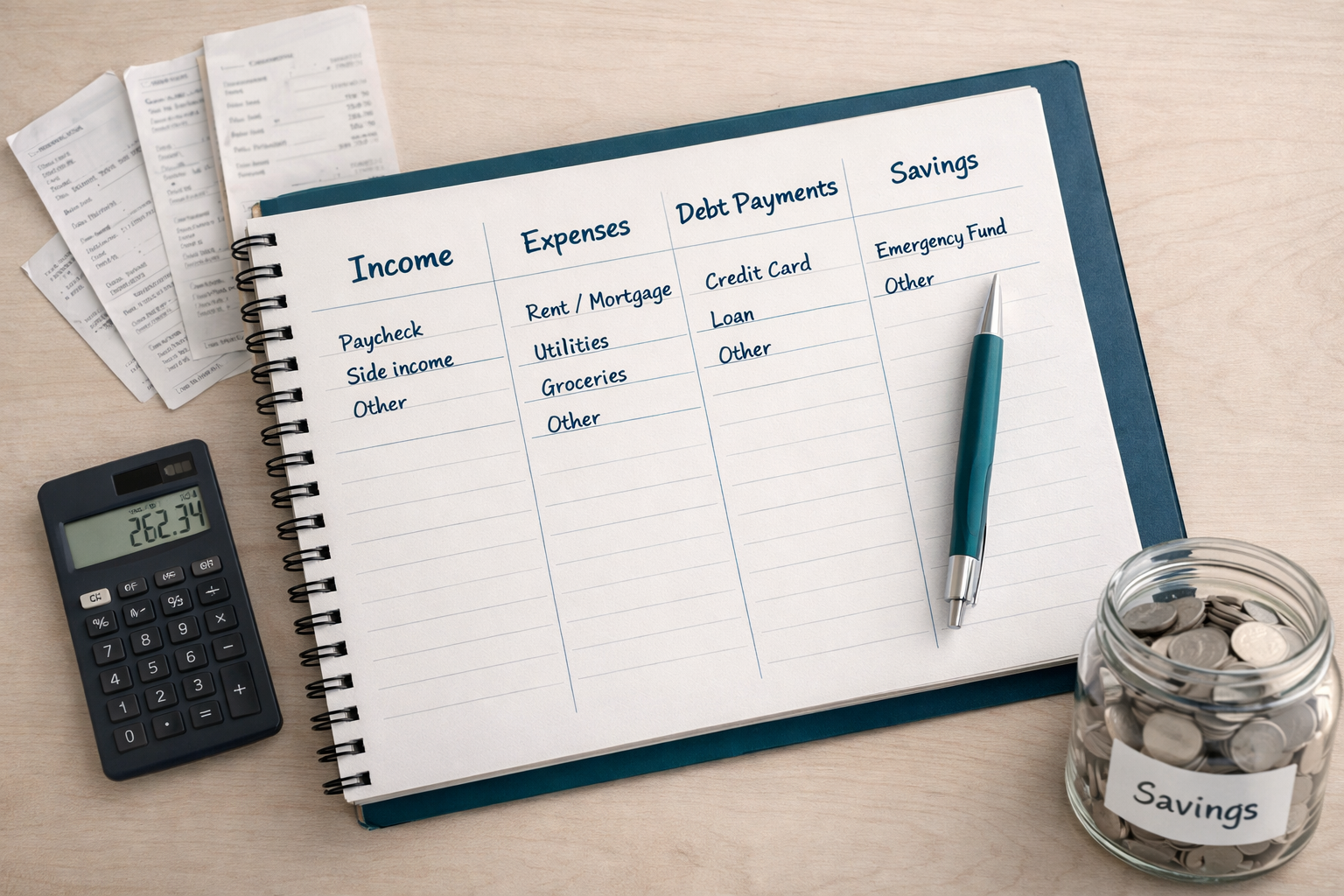
Divide your income into categories:
- Essentials (housing, food, bills)
- Debt payments
- Savings
- Personal spending
👉 Pro Tip
If your expenses feel too high, start with small adjustments—not extreme cuts. Even reducing one or two categories can free up money for debt.
Make sure every dollar has a purpose.
Don’t Forget Savings
Even while paying off debt, saving is important.
Start small:
- $500–$1,000 emergency fund
- Small monthly savings habit
This prevents setbacks when unexpected expenses come up.
Track and Adjust Your Budget
Creating a budget is just the beginning. The real progress comes from tracking and adjusting.
Use Simple Tracking Tools
You don’t need anything complicated.
You can use:
- A notebook
- A spreadsheet
- A budgeting app
What matters most is consistency.
Review Your Budget Monthly
At the end of each month, take a few minutes to review:
- Where did I overspend?
- Where did I do well?
- What needs to change next month?
Your budget should evolve as your life changes.
Tips to Make Budgeting Easier
Budgeting gets easier when you keep it realistic and flexible.
Here are a few simple tips:
Stay Consistent, Not Perfect
You don’t need a perfect budget—just one you stick with.
Give Yourself Some Flexibility
Leave room for small personal spending so you don’t feel restricted.
Adjust as Needed
Life changes, and your budget should too.
Ask for Help If Needed
If you feel stuck, consider guidance from a financial coach or trusted resource.

Final Thoughts
Budgeting doesn’t have to feel overwhelming or restrictive.
It’s simply a tool that helps you:
- Understand your money
- Make better decisions
- Move toward financial freedom
The more consistent you are, the easier it becomes. And over time, what once felt difficult becomes a normal part of your financial life.
FAQs
What if I can’t stick to my budget?
Start by simplifying it. If your budget seems too restrictive, consider adjusting it to make it more realistic. Small, consistent progress is better than giving up.
How often should I review my budget?
A quick monthly review works best. This helps you stay on track and make adjustments when needed.
Is budgeting only for people with low income?
Not at all. Budgeting is useful at every income level. It helps you manage money wisely, no matter how much you earn.
How do I handle irregular expenses?
Plan ahead by setting aside a small amount each month for things like car repairs, holidays, or annual bills.
How can I make budgeting less stressful?
Keep it simple. Focus on progress, not perfection. And don’t forget to celebrate small wins along the way.
👉 Reality Check
If budgeting feels hard at first, that’s normal. You’re building a new habit—and that takes time. Progress matters more than perfection.
Breaking the paycheck-to-paycheck cycle can dramatically accelerate your progress toward financial freedom.


One thought on “Understanding Why Budgeting Matters”